Thursday, October 13, 2011

Pure Evil

If there is one place in the whole of the Philippines where I feel safe to walk any time of the day--or night--it is Los Baños, where I have spent a decade of my life.

As a university town, Los Baños cradles thousands of students coming from different parts of the country. A few stay at the FEW dormitories inside the campus, but most students live in dormitories and apartments in nearby subdivisions. Students going home late at night are a common sight, coming from endless meetings with group mates and org mates. Sometimes they stay late to induce alcohol or caffeine, usually in that order, with friends. But nobody is afraid to go home late at night in Los Baños. It’s the safest place.

Not anymore.

Last Wednesday, news broke about the brutal death of Given Grace Cebanico, a junior UPLB student. According to reports, Given was walking home at 2am to 5th of September Mansion, her dormitory, after a group study session for a final exam. She and her friends parted ways at the corner of Agapita, a well-lighted corner because of a convenience store and street lights in the subdivision’s main road.

Given’s dorm is located in Diamond Street, where everything is still at 2am; the street has few lampposts, but it is relatively near the Barangay Hall of Batong Malake, more or less 500 meters away from it. Perhaps, this is one reason she felt safe to walk home alone at 2 am in that dark and still street leading to her dorm.

What happened to her between 2am and 6am could not have been done by a human being, not even by an animal. Only pure evil could have stabbed and shot a young woman. Only pure evil could have dumped a body without fear near a canal inside the university where she studies. And should reports confirm that Given was raped, that, too can only be done by pure evil. The nerve.

Months before, there were news about students being mugged in the same subdivision where the Barangay Hall is located. Many suspect that it was because of the many ongoing building constructions in the area, bringing in workers who were not actually from there. Others think it was done by people who were relocated in the neighboring barangay to vote for the present mayor last election. All these suspicions, however, were never confirmed since the barangay officials--and more important, the town mayor, (dis)Honorable Ton Genuino--kept mum about these security issues and what’s worse, did not do anything to prevent such incidents from happening then and again.

Two days after Given was found dead, these officials still have not yet released any statement. I doubt if they went to Given’s service at St. Therese to offer their condolences. This is yet another form of pure evil--when you know you can do something--you have the power--to prevent something bad from happening but you are not doing it.   

This is what’s really scary here. The local government officials are not taking care of their people. We are not taking care of each other anymore. The suspects were a bank guard (at large) and a tricycle driver, people who bring us a feeling of security--that the bank may not be robbed or that we be delivered to our doorstep safely, especially in the middle of the night. It turns out that the very people we expect to give us security are the ones who breach it.

The local government should genuinely and immediately respond to the security issues for the safety of all, especially the young students who consider Los Baños their second home. Had they seen the utter misery in the face of Given’s mother in her wake at St. Therese, these officials would have felt guilty of their shortcoming in providing a safe and secure environment for temporary residents studying and working in LB.

May this be the last time we have to hear a story that sends chills to the deepest of our being.

Justice for Given Grace!


Saturday, September 3, 2011

Panagtagbo at Kadayawan 2011


Kadayawan is one festival I’ve been wanting to see ever since. It’s because of the rich cultural experiences this festival offers to tourists—it celebrates the rich diversity of life in Davao City, including the communities of indigenous peoples. Every Kadayawan, tribes living in the mountains, near rivers and lakes converge in the city to join in the festivities. Thank heavens a member of the working class like me can now afford a roundtrip ticket to Davao and see for myself why Kadayawan is touted as the ‘king of festivals’.

The term kadayawan, according to the festival’s official website, comes from the Mandaya word ‘madayaw’, which is “a warm and friendly greeting used to explain a thing that is valuable, superior, beautiful, good, or profitable.”

Held annually during the second to third week of August, the Kadayawan Festival gathers everyone to celebrate and give thanks to a bountiful harvest. However, this year did not bring a good harvest to farmers because of the successive heavy rains that hit the city. Nonetheless, tradition calls for celebration. Instead of highlighting the bountiful harvest, the organizers put a spotlight on the indigenous peoples. As this year’s Kadayawan’s tagline goes, “Ten tribes, One Vibe.”

Having arrived late for the festival (it was Thursday already), the first event I attended was the Panagtagbo, where eleven tribes showcased their culture through music and dance. It was held in Rizal Park under the early afternoon sun. My friends and I arrived when the second group of performers was almost finished. Probably because of the heat and lack of shade from the sun, only a few people were there. But as the show went on, the crowd gradually swelled that included local photographers, foreign tourists and local ones.

One unexplainable thing happened while my friends and I were watching Panagtagbo. During the Maranao performance, a young man and a young woman were chanting in their native dialect, supposedly concerning courtship. Without warning, tears swelled in my eyes. I did not even understand what they were chanting! When I turned to my friend, he was also in tears! And did I say we were under the merciless sun?

They made me, my friend and other members of the audience cry!
 A lump in my throat was also there when an old man from another tribe played the flute in solo performance. Seeing children and tribal elders, Christianized tribes and Muslim tribes in one stage (despite the hideous red background courtesy of a major soda sponsor) warms the heart of a sentimental like me. Beautiful things were there in one stage at the same time and place--life, peace, culture, identity and art.


I was so determined to watch Panagtagbo that I asked my friends if I could stay and watch instead of going with them to Crocodile Park. So there I was, under the merciless heat of the sun, blanketed by an air filled with afternoon sweat, and without any shield against all these.

Although I stood for almost four hours straight, I immensely enjoyed the performances. I especially liked the fact that the tribe members were the ones who performed the dances. Those I previously saw were performed by trained folk dancers. The indigenous peoples who performed have a natural talent in creating music and in dancing—a distinct kind of movements that follow the rhythm and beat of music. I could not take my eyes off the performers because I was just amazed at seeing them perform--for free!

Almost all the tribes used similar musical instruments, particularly the kulintang and agong. In some tribes, young people play them, while in some the elders do it like youngsters do, if not more energetically. Either way, I felt a sense of awe as the drumbeats pulsate in my body, its rhythm inviting me to dance.

As with music, similarities in the dances of tribes were also apparent. One is the use of malong as central in the dances. These also depicted tribal practices such as courtship, livelihood, and protection of their land and its resources. The dancers, on the other hand, comprising of more or less 20, moved with such energy. Some tribes highlighted delicate movements of body, particularly the hand. When they dance, it seems that they’re harnessing nature’s energy.

Children performing traditional dances
Young women from Maranao tribe

Young men can dance, too!
Most performances have both young and old musicians and dancers. Based on the introduction made by tribe members before their performance starts, they say they make it a point to teach their ways of life to the young ones. This sounds good, and it was nice to see young people in the tribes participating in such cultural event even though some of them have obviously been influenced by urban living.

Even though the performances were relatively long based on the short attention span of most media-fed urbanites, they stayed to see and appreciate the performances the IPs prepared. It was a joy to witness such a cultural event. With their indigenous ways of life, the IPs bear the core of Filipino culture. Seeing them is like seeing my core, that thing you always come back to when life seems to have thrown so much to bury it.

Photo Credits: Pamela Custodio

Wednesday, August 3, 2011

Ang Sining sa Panahon ng Diaspora*

*Pananalita sa pagbubukas ng Address (Installation Art Exhibit) nina Alfredo Juan Aquilizan at Isabel Aquilizan noong 2 Agosto 2011 sa DL Umali Hall, UPLB.

Magandang hapon sa ating lahat--sa ating mga panauhin, sa lahat ng mga kapwa ko guro sa unibersidad, at sa mga studyanteng binitbit ng kanilang mga guro at tila napilitang makinig sa aking pananalita. Huwag kayong mag-alala. Ilang pahina lang ito.

Una sa lahat ay gusto kong pasalamatan si Prof. Erma Lacorte na siyang curator ng Sining Makiling Gallery sa imbitasyon na ako ay magsalita sa inyong harapan ngayon sa pagbubukas ng ekshibit ng installation art ng aking dating guro na si Alfredo Juan Aquilizan, at ng kanyang butihing asawa na si Isabel Aquilizan. Itinatampok ng kanilang ekshibit ang mga bagay na kinolekta nila mula sa mga kaibigan at kakilala at isinalansan sa mga balikbayan box, isang ordinaryong bagay na naging simbolo na ng mga pangarap at karanasan ng modernidad ng mga Pilipino. Sila ngayon ay kabilang na sa milyon-milyong Pilipino na nakakalat sa iba’t-ibang lupalop ng mundo. At walang pagbabadya na ang pangingibang-bayan ng mga Pilipino ay titigil sa mga susunod na taon dahil wala rin namang pagbabadyang nabigyan na ng solusyon ang kawalan ng trabaho na siyang pangunahing dahilan sa pagalis ng karamihan sa atin.

Noong panahon na tayo ay nasa ilalim ng mga Amerikano, mga magsasaka ang unang ipinadala sa Hawai’i para magtanim sa kanilang mga pinyahan. Noong panahon ni Marcos, mga lalaki ang karamihan na umalis palipad ng Saudi. Sinundan ito ng mga babaeng nars sa Amerika at Europa, pagkatapos ay ang mga domestic helper sa mga kalapit na bansa sa Asya. At sa kasalukuyan nga ay kabilang na rin ang mga taga-likha ng sining sa mga migranteng Pilipino. Sa tingin ko, kapag mga alagad na ng sining ang umalis para manirahan sa ibang bansa, ika nga ng iba, baka sa kangkungan na tayo pulutin. Para tayong mga bulag--dahil ang kanilang mga likha ang nagsisilbing mga mata natin--kung paanong bigyang kahulugan ang ating mga realidad.

Ito ang ating realidad: may sampung milyong Pilipino na nasa labas ng bansa, at karamihan sa kanila ay para magtrabaho at manirahan doon ang rason. Sampung milyon. Halos kasing laki ng kabuuang populasyon ng mga bansang Portugal, Belgium, Austria at Sweden. Ang bilang ng mga taong ito ay kayang gawing ghost town ang buong kamaynilaan o NCR. Sabi nga ng iba, kung mayroon lang trabaho kahit sa buwan ay makakakita ka ng Pilipino doon. Sino ba sa atin ang walang kapamilya, kaibigan o kakilala na hindi overseas Filipino workers o OFW? 
Isa sa mga unang OFW Film: Miss X (1980)

Sa pamilya ko lang, ang tatay ko, bata pa lang ako, ay lumipad na sa Amerika para hanapin ang “milk and honey.” Ngayon, mukhang bata na lang ako, lahat ng mga pinsan kong lalaki ay nasa ibang bansa rin bilang mga iniinyero at seaman. Marami rin akong mga kaibigang nangibang-bansa at mangingibang-bansa. Kadalasan ay para mag-aral, pero marami rin sa kanila ang dahilan ay para maghanap ng trabaho. 

Pamilyar na siguro tayo sa diskurso na mga naririnig sa media na ang pangunahing dahilan ng pagalis ng mga Pilipino ay ang kakulangan ng trabaho sa bansa. Lumang tugtugin na ‘to, ika nga. 1974 pa lang, nang opisyal na payagan ni Marcos ang pagpapadala ng mga Pilipinong manggagawa sa Middle East, ito na ang sinasabing dahilan. Saka para gatasan sila at patabain ang foreign reserves ng bansa. Noong 1995, dala ng maigting na batikos ng mga tao sa nangyaring kapabayaan ng gobyerno sa kaso ni Flor Contemplacion, isang domestic helper na binitay sa Singapore sa salang pagpatay, dali-daling ipinasa ng kongreso ang Migrant Workers Act kung saan nakasaad mismo sa batas ang dahilang ito. Sabi rin doon, ang pagpapadala ng mga manggagawang Pilipino ay pansamantalang solusyon lamang sa kawalan ng trabaho at pandagdag sa mababang foreign reserve ng bansa sa pamamagitan ng mga ipinapadalang remittance ng mga OFW. Pero ilang dekada na ang lumipas, wala pa ring ibang solusyon ang estado sa mga problemang ito. Ang panandaliang solusyon ay naging pangmatagalan.

Ang aking maikling pananalita ay patungkol sa diasporang Pilipino at ang ekspresyon nito sa mga anyo ng sining, partikular sa mga pelikulang tinawag kong OFW Films. Bahagi ito ng aking naging pag-aaral para sa aking Master’s thesis sa Diliman. Ang aking pagtalakay ay iikot sa mga diskurso ng pangingibang-bansa sa mga pelikula at ang relasyon nito sa naratibo o diskursong pinapalaganap ng estado tungkol sa pangingibang-bansa.

Diaspora at Sining 
Ayon kay Epifanio San Juan, Jr., ang mga Pilipino ang pinakabagong ‘diasporic community’ sa mundo na karamihan ay binubuo ng mga migranteng manggagawa o OFWs. Ngunit hindi tulad ng mga naunang diaspora ng mga Hudyo, Intsik, Aprikano, o mga Palestino, ang diasporang Pilipino ay produkto ng “transnational, global capitalism.” Sa kanyang paliwanag, sinabi niya na dahil sa ‘economic liberalization’ na ipinataw ng mga institusyong nagpapautang sa ating bansa--ang International Monetary Fund at World Bank--hindi na lamang mga produkto ang malayang dumadaloy sa pandaigdigang merkado, kundi pati na rin ang mga manggagawa. Sa madaling sabi, nagiging produkto na rin mismo ang mga Pilipinong manggagawa na inilalako ng sarili nitong estado.

Ang salitang ‘diaspora’ay hango sa katawagan sa mga Hudyo noong sila ay pinaalis mula sa Israel ng mga Babylonian noong 607 BC. Sa ngayon, ang salitang ito ay nangangahulugan ng malawakang pandarayuhan o pagkalat ng mga tao sa iba’t-ibang panig ng mundo dahil sa mga partikular na kadahilan, pangunahin na nga ang paghahanapbuhay--buhay na hinahanap sa labas ng bansa dahil hindi ito mahanap sa sariling bayan.

Para sa mga Pilipinong nasa ibang bansa, ang sining bilang kultural na pagpapahayag ay isa sa mga nagsisilbing lubid na nagbibigkis sa kanila at sa pinagmulang bansa. Para sa mga manlilikha ng sining katulad ng mag-asawang Aquilizan, ito ay daluyan ng pagpapahayag, o ‘medium of expression’ ng kanilang mga agam-agam tungkol sa pamumuhay sa ibayong dagat, ang paghahanap at pagbuo ng bagong pagkakakilanlan, o mga bagong pamamaraan ng ‘de-identification’ at ‘re-identification’. Ginamit nila ang sining bilang paraan ng pagangkop sa bago nilang buhay sa ibang bansa. Ito ay ayon kay Hou Hanru, isang curator at kritiko.

Ang pangungulila, pagbuo ng pagkakakilanlan, pananabik sa pinagmulang bayan, at ang konsepto mismo ng bayan o bansa ay ilan lamang sa mga temang madalas lumilitaw sa mga likha ng mga Pilipinong nasa ibang bansa. Ang mga ganitong akda ay kabilang sa tinatawag na “diaspora art,” na ayon kay Sieglinde Lemke, isang may-akda at guro sa isang unibersidad sa America, ay minsang nagpapahayag ng pangungulila sa tahanan o pinagmulang bayan; madalas ang diaspora art ay sinusubukang bumuo ng kolektibong pagkakakilanlan mula sa iba’t-ibang realidad na nararanasan nila. Makikita dito ang patuloy na pagbubuo ng pagkakakilanlan ng mga Pilipino o Filipino identity, na simula’t sapul ay hindi umiiral. Base sa isang diskusyon sa aking kapwa guro na si Prof. Dumlao, kung susuriin ang ating kasaysayan, palaging mga ipinataw ng dayuhan o di kaya nama’y ng isang uri lamang ng mga Pilipino ang ating pagkakakakilanlan. Hindi pa nabubuo ang pagkakakilanlan ng mga Pilipino.

Bukod sa installation art na ito, may mga Pilipino ring ginagamit ang pagsusulat ng tula, maikling kwento, o nobela para bigyang kahulugan ang karanasan ng mga Pilipinong nasa ibayong dagat. Si E. San Juan, Jr. ay may mga tula tungkol sa mga migranteng Pilipino. Ang iba namang manunulat ay ginagamit ang panitikan para labanan ang kalungkutan at para malagpasan ang bawat araw sa ibang bansa.

Bukod sa panitikan, may mga direktor ng pelikula rin na piniling magtrabaho sa ibang bansa pero patuloy pa rin sa paggawa ng mga pelikula. Ang experimental filmmaker na si Chris Gozum, dating guro sa Dept. of Humanities, ay isa sa mga ito. Kakikitaan ang kanyang pelikula ng halong pangungulila sa iniwang pamilya at pananabik na sila’y makita muli. May mga napanood din akong pelikulang gawa ng mga Fil-am, katulad ng The Debut kung saan itinatampok ang pamumuhay ng mga Pilipinong pinili nang permanenteng manirahan sa Amerika.

Ang mga halimbawang ito ay maaari rin namang basahin bilang sintomas ng malubhang pagkukulang ng estado sa mga tao tulad ng pagsisigurado ng trabaho para sa mga manggagawa at suporta sa sining para sa mga tagalikha nito. 

Ang pelikula bilang popular na sining 
Ito rin ay maaaring isang paliwanag sa mga naglipanang OFW Films, o mga pelikulang patungkol sa mga migranteng Pilipino. Isang pagbasang iminungkahi ni Prof. Dumlao. Ang pelikula, bagama’t hindi kabilang sa tradisyunal na sining, ay itinuturing na popular na sining dahil sa pagiging accessible nito sa mga tagapanood. Dahil ang mga Pilipino ay likas na mahilig manood ng pelikula, na minsan na ngang binansagan ni Joel David, isang kritiko ng pelikula at propesor, na ‘national pastime’ natin, importanteng pagaralan ang mga diskursong nakapaloob dito dahil sa malaking posibilidad na ito ay nakakaimpluwensiya kung paano naiintindihan ng mga tao ang mga realidad na kanyang kinapapalooban.

Sa kaso ng OFW films, nagtatampok ito ng mga kathang-isip na naratibo ng mga karanasan ng pangingibang-bayan at naka-sentro ito sa OFW character. Karaniwan sa mga pelikulang ganito ay nakatutok sa babaeng OFW na nagbibigay-diin sa peminisasyon ng paggawa, at karaniwan ay mga domestic helper o di kaya nama’y mga trabahong kabilang din sa tinatawag na 3D jobs--dirty, difficult and dangerous--katulad ng caregiving, ‘cultural entertainers’ o pinabangong tawag sa mga nagpupunta sa Japan, at mga biktima ng white slavery o prostitusyon.

Ilan sa mga kilalang halimbawa ng ganitong klaseng pelikula ay Anak noong 2000, Milan noong 2004, at Caregiver noong 2008. Pero 1941 pa lamang ay may OFW Film na--ang Karayo, isang pelikula sa Ilocano na ginawa sa Hawai’i tungkol sa mga Pilipinong nagtatrabaho sa mga pinyahan doon. Noong 1980 naman, ilang taon pagkatapos opisyal na gawing polisiya ni Marcos ang pagpapadala ng manggagawa sa labas ng bansa, nagawa ang Miss X na pinagbibidahan ni Vilma Santos tungkol sa biktima ng illegal recruitment na naging biktima rin ng prostitusyon. Si Nora naman ang bida sa‘Merika noong 1984 tungkol sa isang nurse sa Amerika na gusto nang bumalik sa Pilipinas. Parehong idirehe ni Gil Portes ang mga ito, na siya ring gumawa ng ilan pang OFW films nitong huling dekada tulad ng Homecoming at Barcelona. Nagkaroon din ng panahon noong 1990s kung saan nauso ang mga biopic ng mga inabusong OFW tulad ng The Flor Contemplacion Story (1995) at Sarah Balabagan Story (1996).

Hindi lamang sa komersyal na industriya ng pelikula mayroong mga OFW Films; ilan sa mga independent productions ay ang La Visa Loca (2003) na pinagbidahan ni Robin Padilla, Miss Pinoy (2005) kung saan bida si Judy Ann Santos, Balikbayan Box (2007), at ang Emir (2010) na pinondohan ng mga ahensya ng gobyerno tulad ng Film Academy of the Philippines at NCCA. Meron din namang mga pelikulang ginawa ng mga taga-ibang bansa kung saan may mga tauhang OFW. Pinakabago dito ang Pinoy Sunday (2009) na ginawa sa Taiwan na pinagbibidahan ng dalawang Pinoy na artista.

Ilan lamang ito sa mga higit-kumulang labinlimang pelikulang nagawa tungkol sa mga migranteng Pilipino sa loob ng halos apat na dekada, na karamihan ay nasa komersyal na industriya at nagawa nitong huling dekada. Kapansin-pansin na karamihan sa mga kilala at kumitang OFW films ay ang mga ginawa ng Star Cinema, na kabilang sa mga kumpanya ng ABS-CBN, na siya ring may-ari ng The Filipino Channel, ang cable channel sa ibang bansa na nagpapalabas ng mga local na sitcom at pelikula. Milyon-milyon ang itinabo, halimbawa ng Anak at Caregiver kahit na sa pagpasok ng huling dekada ay napakahina ng industriya. Hindi na nanonood ng pelikula ang mga tao katulad ng dati, dahil na rin siguro sa pagtaas ng presyo ng ticket. Dahil dito, ang mga pelikulang ginawa ay yung mga siguradong kikita--gagamit sila ng mga malalaking artista katulad nina Vilma at Sharon. Bumaba na ng husto ang kalidad ng mga pelikula. Ang ibang mga kritiko nga ay idineklara nang patay ang Pelikulang Pilipino noon.

Nakitang puwang ng Star Cinema ang OFW films para pagkakitaan. Una, marami silang hawak na malalaking artista. Ikalawa, mayroon silang nakahandang tagapanood lalo na ang mga Pilipino sa ibang bansa na mayroong mga TFC. Kung kaya naman ang karamihan sa kanilang mga pelikula ay sumasalamin sa mga karanasan ng mga Pilipinong nangibang-bayan. Melodrama ang pangunahing genre ng OFW films at may pormulang sinusundan ang mga storya na pamilyar sa mga tagapanood. Sigurado ang kita ng ganitong mga pelikula.

Base sa aking pagaaral ng mga OFW films mula 1980 hanggang 2008, kakikitaan ng mga pagbabago sa diskurso ng pangingibang-bansa ang mga pelikula. Sa mga naunang OFW film tulad ng Miss X at ‘Merika, may pagaalinlangan ang mga tauhan na umalis ng bansa at minsan pa nga’y may pahaging na batikos tungkol sa pangingibang-bansa dahil siguro bawal punahin ang rehimen ni Marcos noong panahong iyon. Sa mga OFW films naman noong 90’s, tahasan na ang pagbabatikos dahil ang naratibo ng ganitong mga pelikula ay hango sa totoong buhay ng mga OFW na nakaranas ng pangaabuso sa ibang bansa tulad ni Flor Contemplacion. Ngunit pagdating ng dekada 2000s, naiba ang ihip ng hangin. Sinimulan ito ng Anak kung saan nabigyang-diin ang pagiging “bagong bayani” ng mga domestic helper katulad ni Josie, na ginampanan ni Vilma.

Ang diskurso ng “bagong bayani” ay inimbento ng estado para pagtakpan ang kakulangan nitong magbigay ng trabaho sa bawat Pilipino, lalo na ang mga hindi nakatapos ng pag-aaral at nangagailangan. Maganda sa pandinig, pero kung tatanungin mo naman ang mga OFW, wala sigurong sasagot na para sa bayan kung bakit sila umalis ng bansa--para ito sa kanilang pamilya. Binago na ng pelikula ang konsepto ng ‘bayani.’

Sa mga sumunod na pelikula ng Star Cinema, Milan, Dubai--lalo na ang Dubai--ay kakikitaan din ng ganitong pagdidiin. Sa Caregiver naman, ang pinakahuling pelikula ng Star Cinema na tungkol sa OFW, hindi na lamang pangangailangang pinansyal ang dahilan kung bakit nangibang-bansa si Sarah, isang guro sa pampublikong paaralan na ginampanan ng Megastar. Nais niyang maranasan ang mas maginhawang pamumuhay na ayon sa pelikula ay hindi makikita sa Pilipinas kung hindi sa ibang bansa. Maari itong basahin na indirektang pagbatikos sa kalagayan ng bansa ngunit sa huli, ang pelikula ay nangaakit ng mga tagapanood na subukang hanapin din ang maginhawang buhay sa labas ng bansa. Binibigyang-diin nito na ang pangingibang-bayan bilang kagustuhan ng indibidwal. Para bang sinasabing iwan na ang Pilipinas dahil wala ng pagasa dito. 


Dagdag pa, kung papansinin ang mga pelikula sa kasalukuyan, itinuturing nila bilang isang natural o normal na bagay na ang pangingibang-bansa. Nawala na sa diskurso ang pagiging pansamantalang katangian nito na naaayon sa batas. Nabura na ang mababang pagtingin ng karamihan sa mga 3d jobs dahil sa pagganap nina Vilma at Sharon (na lumabas rin sa naunang pagaaral ni Roland Tolentino). Sa ganitong paraan, naging natural na rin o normal ang problema ng kawalan ng trabaho at kabiguan o pagkukulang ng estado na tugunan ito. Dahil may mga nakahandang trabaho naman sa labas ng bansa, hindi na dumadaing ang mga tao sa gobyerno na tugunan ang kawalan ng trabaho sa loob ng bansa. Naging normal at natural na rin ang paghihiwalay ng pamilya--ang mga magulang sa anak, ang mag-asawa.

Sa kasong ito, ang sining ng pelikula ay nagamit ng estado bilang katuwang nito sa pagtaguyod ng pangingibang-bayan. Ang maigting na panghihikayat ng gobyerno, lalo na noong panahon ni Gloria Arroyo, ay dahil sa bilyon-bilyong dolyar na ipinapasok ng mga OFW sa bansa. Wala nga namang kahirap-hirap sa ganitong kalagayan--kumukita ang gobyerno kahit hindi ito nagta-trabaho. Nagamit ang medium ng pelikula para mas madaling tanggapin ng mga tao ang pagiging natural o normal ng ganitong kalagayan.

Ngunit hindi lahat ng pelikula ay ganito. Nariyan ang mga pelikula sa independent cinema na mas malayang nakapagpapahayag ng pagbatikos sa polisiya ng estado ng patuloy na pagpapadala ng mga manggagawang Pilipino sa labas ng bansa. Ipinapakita nila ang mga pangit na katotohanan ng pangingibang-bansa gayundin ang pagbabalik bansa. Maraming programa ang gobyerno sa pagpapaalis ng mga Pilipinong manggagawa, ngunit salat ito sa mga programa para sa mga bumabalik. Tuloy, nawawalan ng gana ang mga Pilipino na bumalik dito kahit gustuhin man nila.

Ang Sining sa Panahon ng Diaspora
Ang sining sa panahon ng diaspora ay higit na mahalaga upang patuloy na makatawag pansin sa mga isyu at diskursong nakapaligid sa usaping ito katulad na lamang ng mga nais ipahayag ng installation art ng mga Aquilizan tungkol sa pangingibang-bansa--ang mga alaala ng pinagmulang bayan na nakapaloob kahit sa mga maliliit at pangaraw-araw na bagay, ang pangungulila sa iniwang bayan na pinagkasya na lang sa mga balikbayan box na ipapadala dito. Sining ang naging takbuhan ng magasawa upang malampasan ang biglaang pagbabago sa kanilang buhay at upang bigyang kahulugan ang kanilang mga bagong realidad. Ang pagbuo ng sining ay ang pagbuo ng bagong buhay.

Dagdag pa, ang sining, katulad ng popular na sining ng pelikula, ay hindi rin dapat humiwalay sa kakayahan nitong magmulat sa nakararami. Dahil ang diaspora ng Pilipino ay hindi naman natin kagustuhan simula pa lang. Maaaring sa ngayon ay may mga pinili talagang umalis ng bansa, pero marami pa ring napipilitang iwan ang pamilya sa Pilipinas. Ipinipilit ito ng estado at ipinalalabas na kaaya-aya upang pagtakpan ang kanilang kapabayaan. Ang pagtugon sa kakayahang ito ang magsasabi kung ang sining ay nakakaugnay sa panahon at kontekstong pinanggagalingang nito.

Maraming salamat.


Sunday, July 31, 2011

A 'Feminist Fairy Tale': A Review of Antonia’s Line (1995)

“Nothing dies forever. Something always remains from which something grows. 
So life begins without knowing where it came from or why it exists. 
Because life wants to live.”
-Antonia's Line


Described as a “feminist fairy tale” by its feminist director, Marleen Gorris, this 1996 Oscar Best Foreign Language Film celebrates the lives of women in a small agricultural town. Its narrative centers on Antonia and her lineage of women geniuses: Danielle, her daughter, a painter; Therese, her granddaughter, a math wizard and a composer; and Sarah, her great granddaughter, a writer. In the periphery are the stories of Antonia’s friends and neighbors, making the film also about the story of the town itself with its eccentric characters after World War II.    

The fairy tale starts when Antonia’s declared, “It’s time to die.” Perhaps it’s part of the fairy tale that a woman can choose the time of her death and not let sickness or accidents or another individual end her life abruptly, a life she had lived fully every moment. The film then brings us to her past in a flashback when she, together with her young daughter, returned to her birthplace to attend to her mother who seemed to have waited for her before dying. From there, the film followed the lives of Antonia and the three generations in her lineage, then returns to the first scene.

In her deathbed, Antonia’s mother curses Antonia’s father for leaving them. At this early part of the film, the director already expressed how women suffer emotional abuse from men. Later scenes show more of these abuses in the form of rape and verbal abuse. However, this is not to say that the film hates men; in fact, it also depicted them in a positive light through the character of Farmer Bas, Antonia’s love interest, Simon, who fathered Therese’s daughter, and Crooked Finger, Antonia’s childhood friend who never left his house since after the war.

The first two both respected the decisions and choices of ‘their’ women--Antonia did not want to give her hand in marriage to Bas (“but you can have the rest of my body,” said Antonia), while Therese wanted to focus on her career as a mathematics lecturer and as a composer that she can’t fully attend to her motherly tasks (Simon tells his daughter, “I regret to tell you that your mother is not normal.”) Crooked Finger, on the other hand, serves as the source of wisdom in the film, having read Schopenhauer, Nietzsche, and other philosophers all day for decades. He occasionally provides philosophically-grounded moral advice to his childhood friend’s (Antonia) daughters, though the latter did not adopt them at all times.

The characterization of women in the film mirrors the concerns of its audience during the 90s--the ‘modern women’ who are already familiar with gender politics. Themes such as marriage, pregnancy, career, and lesbianism were touched upon in the film. It is in depicting these themes that the film turns into a fairy tale because it showed possibilities that women can aspire for. Antonia and Therese’s characters show that marriage is a choice and not an obligation of women, that it’s okay that a woman is not married because she can still have love and build a family even without it. Danielle found her love in another woman, and their relationship had stood the test of time. Lesbianism in the film, as with feminist discourses, is depicted as a relationship as ideal as that between a male and a female.

Antonia and her daughter Danielle return to her hometown after 20 years
In addition, the film is filled with strong and independent women who, like men, may have doubts and other issues when it comes to lifetime commitment with another person, but who, unlike some men, are courageous enough to face their real desires. Strength is also seen when Therese weathered her tragic experience of rape and overcame it to continue living her life. Moreover, the feminist discourse on women solidarity was also shown when Antonia helped other women in need, such as Deedee when she was raped and a friend who gives birth year after year when she needed a roof to shelter her children. 

Aside from issues relevant to women, religion is another recurring theme in Antonia’s Line. One scene shows the town priest babbling about indecent and immoral women during his sermon. Antonia and Danielle stormed out of the church, followed by Farmer Bas and his sons. The next scene shows the Antonia and Farmer Bas blackmailing the priest whom they caught kneeling down, not in prayer, but giving oral sex to a crying woman. By this time, the audience knows what to expect next--the priest reverses his sermons about women. This sequence also shows how religion can be a means of oppressing women.

Antonia’s Line celebrates the lives of women--complex and vibrant these are. Echoing the basic ideals of feminism, the film provided clear illustrations of lives lived in these ideals--the practice of the theory. Perhaps, it is not just a fairy tale after all.

Some Memorable Scenes:
  • When Danielle told his mother, “Mom, I want a baby” while she helps her put a fence in their farm. She explained to her mother that she only wanted a child but not a husband. In the next scene, they went to the city, asked a friend where they can find a “donor,” found one and sealed the deal.    
  •  When Antonia, carrying a shotgun and full of anger, went to Olga’s bar to look for the man who raped her granddaughter. Although she had a loaded shotgun, she could not use it, so she just cursed the man and left him in the fists of the bar regulars.
  • The last scene, when Antonia was in bed ready to die and her family and friends surrounded her. There was no dialogue, but Antonia’s eyes conveyed what she wanted to tell the women in her line more clearly than any words. 

Friday, July 22, 2011

On Violence and Revolution: A Reading of Akira (1988)

Neo-Tokyo in 'Akira'

Considered as one of the best animated movies of all time by Time magazine's resident film critic, Richard Corliss, Akira--a 1988 Japanese animated film--depicts a dystopic future of Tokyo, referred to as neo-Tokyo in the film, three decades after World War III and after surviving another nuclear holocaust. The film is populated with a host of violent characters: Tetsuo, member of The Capsules, a gang of juvenile bikers led by his friend Kaneda, Ryu and Kei, members of Anti-Government Resistance Fighters, the Colonel who declared Martial Law in neo-Tokyo after the Executive Council cut his budget for scientific research on three children with immense mental powers. A boy named Akira was also included in the experiment who also had powers thought to have caused the third World War. The State hides Akira's fragmented remains (that have also been experimented after his death) because these still hold massive energies that can destroy the whole neo-Tokyo. Tetsuo, who was the latest addition in the military-scientific experiment, sought to find Akira, unleashing his uncontrollable power along the way. Thus, he became a monster, wreaking havoc in neo-Tokyo and killing even his own friends in The Capsules. Not Kaneda, however, although he was envious of him (primarily because of his red motorcycle) and feels inferior to him because the former always rescues him from danger.


Tetsuo as a Monster

The revolutionaries in the film, led by Ryu and Kei, eventually helped Kaneda to rescue Tetsuo from the military-scientific experiment after Kaneda helped Kei escape police interrogation and torture for protesting and causing violence. All of them later learned of the power of Akira, redefined as the sum of all the people's energies that can destroy not only neo-Tokyo but the entire universe. So the State hides it from the public; the revolutionaries and cult followers seek for it. 

'Akira' in this context becomes a powerful revolutionary ideal. Its characteristic of originating from every one, being shared and could be harnessed together can be used to achieve the goal of toppling the oppressive State and install a new one. But such immense energies could inevitably lead to cataclysmic and violent ends. In the film, Akira's energy was unleashed and the whole of neo-Tokyo was blanketed by a blinding white light--the cataclysmic end. It seems to say that in order to build a new society, first it must destroy the existing one. It seems logical--for one cannot build an entirely corrupt-free, people-led State without annihilating the corrupt technocrats in the government. 

Such a notion implies violence as requisite to revolution; but violence is to be expected in any revolution. In Christopher Finlay's article, "Violence and Revolutionary Subjectivity: Marx to Zizek," he said that although Marx and Engels viewed it as incidental--"like a midwife whose interventions may (or may not) be required during the birth of a new society out of the womb of the old" (p.373)--the scholars influenced by their works and describing revolution in the context of their own time viewed it as essential to the process of forming a 'revolutionary subjectivity,' which in turn is crucial to revolution itself. 


Kei, The Revolutionary

While revolution is at the core of this manga-adapted animated film, in its periphery lies a story of friendship between Tetsuo and Kaneda that ended tragically with the former's destruction by his own doing, the disgruntled Japanese youth, and the empowerment of women through the character of Kei, who, together with Kaneda, was left the task of building a new Tokyo. 

For each scene leaps into the screen, arresting the viewer's senses, Akira is indeed one of the best in its league--and reportedly the most expensive, too, with billions of yen invested on it. Nonetheless, each yen is worth it to see the 2000-page manga with the same title turn into a two-hour visual feast by its writer and director, Katsuhiro Otomo. 

Reference: 
Finlay, Christopher. (2006). "Violence and Revolutionary Subjectivity: Marx to Zizek" in European Journal of Political Theory, 5(4), 373-397. 

Photo Credits:


Friday, June 24, 2011

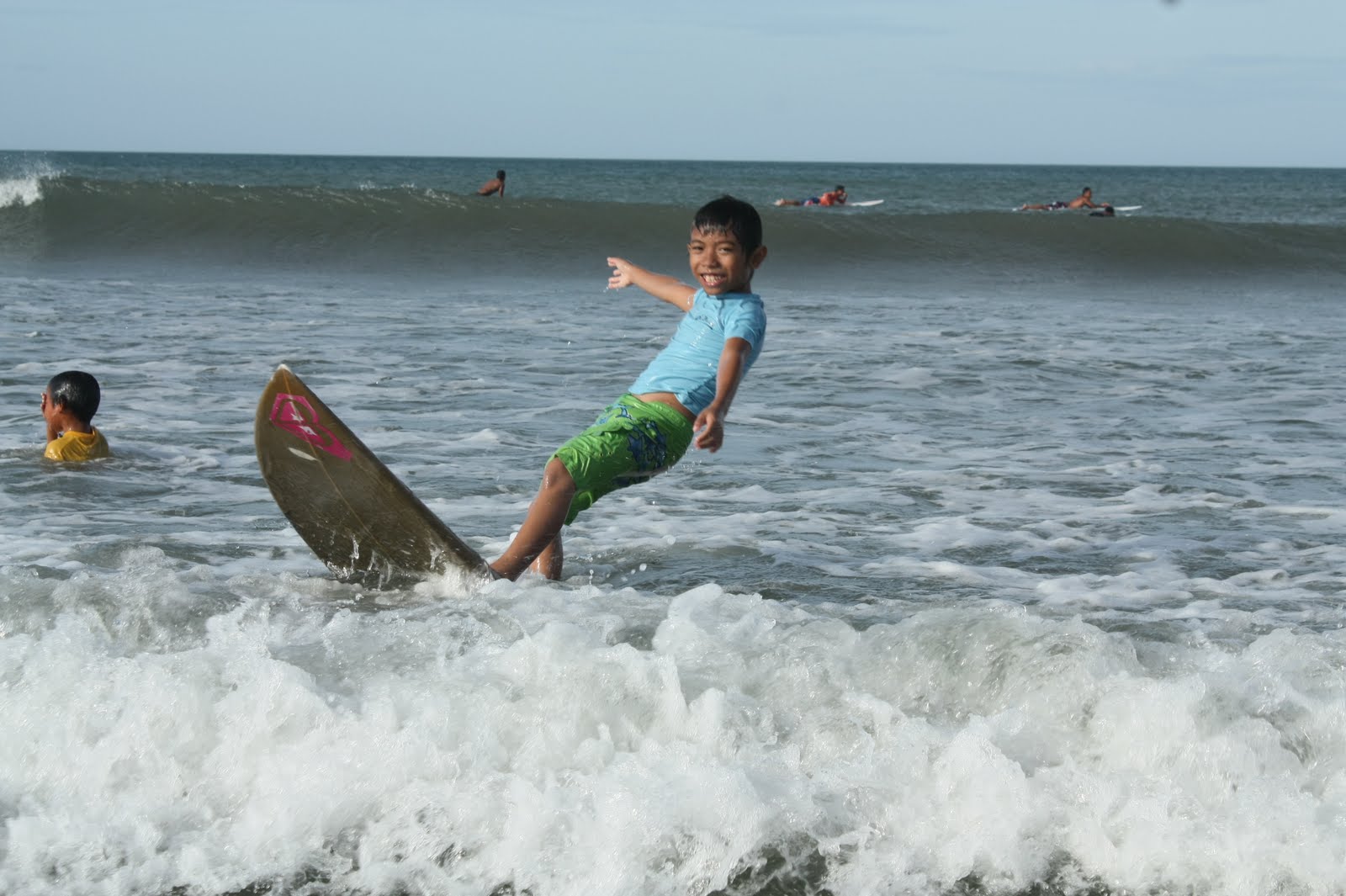
Surfing at Bagasbas Beach

My last days of summer were spent working and surfing—not a bad way to end my bumness, I think. After a year of study leave, I'm back working, but all I could think of is going back to Bagasbas to surf. 

surfing lessons

I never thought I could surf because one, I don’t know how to swim; two, I’m afraid of the open sea—sometimes. But I did learn how to surf, thanks to my ultracool surf instructor Mocca, who is well-known among surfers frequenting Bagasbas Beach in Daet, Camarines Norte. (A documentary about her was made by Samantha Lee, a film major in UP Diliman, titled, Agos). I still don’t know how to swim though.


Agos by Samantha Lee, a documentary about Mocca
see also Mocca here 
http://www.youtube.com/watch?v=-EvUnp629pE

It was difficult getting up from the surf board because of my heavy upper body, but I managed to paddle and stand up a few times after two hours of surfing. The feeling of riding the waves was pure bliss. I felt calm. It’s as if I was in trance. Balancing while standing up in the surf board made me concentrate on the task at hand. It was the only time I felt that I had a clear mind. I was moving in an endless and limitless space, a feeling of pure freedom.

Now I know why many people get stoked. Never mind the dark face, arms and legs afterwards.

after many failed attempts, finally got that thing going


fear the waves no more

soft landing

Even though Kitch and I spent only a night and a day in Bagasbas, we felt we had been in that place for a few days already. The local surfers were very friendly and they made our trip really memorable. These are the things we did in 24 hours: drink beer (night), surf (next morning), lunch at Catherine’s (inside Bagasbas Lighthouse), shopping at surf store, drink (again!) lychee-flavored lambanog by the beach with our newfound surfer friends while watching people (especially the young surfers), swim until the sun sets.
surfers get goofy playing beach volleyball


lambanog by the beach

They say Bagasbas Beach is the best for surfing beginners. To go there, ride a bus going to Daet. Superlines, Amihan, and Philtranco have daily trips to Daet. Once in the town, ride a tricycle going to Bagasbas. It costs P50 for a special trip, but if you’re on a tight budget, you can go to the tricycle terminal at J. Lucban Extension St. in downtown. Fare is P10 per passenger.

where we stayed

In Bagasbas Beach, there are already many choices for a place to stay even though it is not yet as developed as other beaches in the country. The most popular would be the Bagasbas Lighthouse, which offers fully-furnished container vans for accommodations among others. Other more budget-friendly inns are available also. Based on our inquiries, average room rates are P500-700 for fan room and P1000-1500 for air-conditioned room. Most inns offer surfing lessons, but owners will refer you to Mocca and her group. You can contact Mocca directly at 09212518748.

Until the next wave.

Lilay, a pro-surfer at 12 years old

Mocca's son


Saturday, May 21, 2011

The Colors of Pahiyas 2011

Lucban Church

Every May 15, the streets in the small town of Lucban become congested with people from different areas of neighboring towns and cities to see the colorful festival of Pahiyas. Despite the lack of sleep, I went to Lucban with my friend and his daughter for a whole day of walking and taking pictures under the heat of the unmerciful sun.

It is my second time to join the pilgrimage to this town nesting at the foot of Mt. Banahaw to join in the celebration of the bounty harvest of our farmers. The Pahiyas Festival is also a thanksgiving to San Isidro Labrador, the patron saint of farmers. All the houses and businesses (even funeral parlors!) in the selected streets for Pahiyas are decorated with colorful kiping. It is shaped like a leaf and is made of rice paste. Some locals do not use the leaf-shaped kiping as decoration though. They crush it, the kiping looking like crushed egg shells, then glue it to their walls and ceilings for added texture. 
A Two-Storey House Decorated with
Crushed Kiping from the Ground Up  
The Pahiyas Festival lasts for almost half a month, starting in the first days of May and culminating in the Grand Parade in May 15. A lot of activities were lined up in this year's Pahiyas, including Mutya ng Lucban, Ginoong Lucban, Gayak Carosa Float Parade, where the carriages pulled by carabaos are decorated with the agricultural products of farmers, and some Philippine games. Too bad I was not able to watch them, but all winners and runner-ups in the competitions held were part of the Grand Parade we saw.  

The small streets of Lucban were filled with thousands of visitors to join in the celebration.
There were more people this year than last year, I think. Los Banos being relatively near Lucban, we saw quite a number of friends and acquaintances from LB. We also saw a celebrity eating pancit habhab. He was apologetic for eating it in a plate instead of the traditional way of putting the pancit in one's mouth. It is best eaten with vinegar.   


Only in Lucban: Pancit Habhab
What I like best in this festival is the cultural authenticity of it. Unlike other festivals, Pahiyas is rooted in our agricultural culture and the locals are the ones who initiated it. In this festival, the farmers are given recognition due to them. The locals participate actively in the activities: farmers parade with their carabaos (my favorite part); local designers create colorful gowns and barong made from local materials like banig. Although there were also big companies sponsoring the event, the local government make it a point that the Pahiyas does not become their sponsors' festival.


A Farmer's Best Friend
Photo taken during the Grand Parade
What makes Pahiyas also memorable is the warm hospitality of the locals. They allow strangers to enter their home just so they can take their pictures. They invite strangers to eat and drink lambanog, the local drink made from coconut, even if it's only 9 o'clock in the morning. It is here where I experienced the famed Filipino hospitality during fiesta. Aside from the lambanog shots, we even spent an afternoon siesta in a local's living room and almost took a bath in their house, with its ice-cold water coming from Mt. Banahaw, to counter the afternoon heat.  

My Lakwatcha Buddies Inside a Local's Home
The only problem we encountered is transportation going home. We decided to leave Lucban at around 7pm. We thought it was still early, but there were no jeepneys. There was a long line of passengers. We waited for at least an hour before we were able to ride a jeepney (we called it the Busney because it's bigger than the usual jeepney, almost the size of a mini-bus). When we arrived in Sta. Cruz, Laguna, it was almost 10 pm. Together with many other passengers, we had to wait again for a jeepney going to Calamba, Crossing. And because we did not want to ride in the jeepneys with drivers and dispatchers who took advantage of the situation and suddenly increased the fare, we waited longer than the other passengers. When we arrived in LB, we had to wait again for a jeepney.

The Most Photographed House

The Most Colorful House
Although there was a lot of waiting before we could go home, it was a lot of fun. We ate, talked, walked around. We almost rode in a Ferris Wheel and Octopus that could take away our lives while we were waiting in Sta. Cruz, but we thought we'll die another day. And see another Pahiyas next year. 

See http://www.facebook.com/media/set/?set=a.2089322431283.2132987.1191877324 for more pictures of Pahiyas Festival 2011.