Wednesday, April 18, 2012

A (Slow) Runner's Tale: The Bull Runner Dream Marathon

Seconds away from crossing the finish line

Exactly a month ago I ran my first marathon, a full 42.195 km. It’s like riding the LRT line 1 almost thrice over, or going to Alabang from Los Baños--on foot. When I tell my friends about my running a marathon, they are wowed and, being my true true friends, they’d tell me I’m crazy. I now believe them. But crazy is good, most of the times. I get to push my limits until this word does not exist anymore in my system, and this, I think, is what my marathon experience was all about. It made me believe that everything is possible when the mind believes so and when you act on it.

It’s really difficult to summarize what I experienced that day, and I actually postponed writing about it deliberately to let the experience sink in. As the days go on, however, I find it difficult to push the pen into the paper because I could not find the words that would best express this unbelievably surreal experience.

So how do I make sense of my running 42.195 km in 6 hours and 47 minutes? Here are a few things I learned:

1. I am loved. I had a whole cheering squad with me led by a person closest to my cardiac muscle--En, who was there with me before the gun start until I finish almost seven hours after. He was there to make sure I cross that darn finish line (and have photos as proof!) and receive a sweaty hug from me.

(L-R) Ai, Kitch, Jaja, me and Cid.
Look at those "I am with a marathoner" shirts!

The En and I
(what's wrong with my right foot? It's in lurv.)
My friend Kitch and former students Jaja and Cid were also there from start to finish, sacrificing one night of good sleep. They even made a shirt for me and for the cheerers. Ai arrived in the morning just in time to see me cross the finish line. Also there were my cousins, my mother (whom I did not expect to come) and my nephew, who at Km 40 was calling my name at the top of his little lungs, giving me a second wind.

Marathoner shirt.
Thanks Ja and Cid!
Not to forget of course the Dream Chasers all throughout the route who gave me gummy bears, chips, chocolates, ice and gave me the needed boost through their energetic cheers and gimmicks. One station had balloons to welcome runners, while another near the finish line set up a vanity station where runners can look at the mirror and see if they look decent enough for their photos when they cross the finish line.

A big thanks also to Coach Jim Lafferty, who was riding on his motorcycle yelling some encouraging words for runners, and another man, whom I think is also a coach and one of the organizers. I’m so sorry for not knowing his name since I was not able to attend any bull sessions. I was running on an uphill and stopped to walk--no, not because I gave up but because it’s already time to walk following my 4:1 pace. He passed by me and probably noticed my sudden stop. He gave me advice on how to run again while in an uphill, or something like that. It’s a wonder how such small talk helped a lot in giving me confidence to finish the race.

2. Running is Zen and sometimes, surreal. It may be a competitive sport but for me it has always been a form of meditation. Despite the fatigue, the rhythmic movement of my arms and legs in tune with my breathing calms my body and spirit.

I experienced it best somewhere near Km 8. It was still dark since the race started at 2am. The moon was out but there were clouds threatening to cover it. I saw cows in the hilly road side, one standing and another lying down but both are very still looking at the moon. I stared at them for a while and then looked at the moon again. The clouds had already covered it, and the cows were just there looking at it disappear in the dawn sky.

I find this episode really surreal and enchanting yet very calming. It was as if the cows had this ritual of seeing the moon set to give way to the sun. It was as if they understood everything in the cosmos, including its randomness. For me it was one of the things I’ll remember most and tell my friends about during the race.

3. Mind over matter. It works. At 10 km, I was already hungry. I did not have any gels with me simply because I don’t like them, and I did not have a hydration belt where I could have snuck in chocolates or energy bar simply because it’s expensive. I had been running for more than an hour (I know, I’m a slow runner) and I badly wanted to eat a banana. Remembering the race map, I know that at 16km, there would be a Key Station where I can get food. When I got to the station, nothing was there. I think I saw some boxes, but there were no people manning the booth.

Hoarding bananas
cause I don't wanna get hungry again!
I continued to run hungry since I can’t do anything about it. I just thought that I could meet En in the first turnaround, which is more or less 5km away, and get bananas from him. To quell my hunger, I drank more Gatorade than water. I thought the sugar can do for the meantime. When I reached the turnaround, I did not see any familiar face. The turnaround was not the start/finish line, where En and my friends were waiting. So there I was, running hungry from km 10 to km 25. All the time, I was fighting my hunger pangs in my mind--and I won.


When I finally saw bananas in one station, I ate and took two for the road. I ran the rest of the route with bananas in my hands (turn your green mind off, you). I made sure I’d never get hungry again during the race!

4. Training pays off. One achievement I consider in running the Dream Marathon, aside from finishing it, is running all the uphill. Several weeks before the race day, I joined a 10km run in Los Baños. I thought it would be easy since I already had long runs in my training prior the race. Talk about underestimating. The route was so difficult! The inclines were really crazy hell. Every time I would see an uphill, I would walk--no, drag myself. I was traumatized.
After that fun run, I trained hard in all the uphill in Mt. Makiling. I ran where the “elite” runners in Los Baños run. I was determined to not let uphill beat me.

Came race day I told myself the trauma was over. It’s a good thing that the uphill during the race was less crazy hell than those in Los Baños. Even in the last kilometers of the race, I was still running the uphill and I was uberhappy and proud of that.

5. Success is pure joy when it is shared. At the 42km marker where runners make a right turn towards the finish line, things were getting a little crazy surreal for me. Did I just run 42 km? I started to hear faintly the cheers of those waiting in the finish line, and I could see a crowd gathered there; a crowd was also on the sides leading to the finish line, including dream chasers and new marathoners.

A few meters away I saw Man, a friend from LB who also ran the marathon, and hugged him. He finished ahead of me. A few more meters I saw my cousins gathered together, and they were surprised when I called them because they said they did not recognize me. They did not see me before the race so they did not know what I had on.

A few meters from them, the finish line.


Crossing the finish line wearing the singlet in my first fun (trail) run
in LB two years ago

A medal at last!

A few steps (as in two steps) away from the finish line are my cheerleaders.

Everything went crazy inside me when I crossed the finish line. So crazy that I was forgot to take a photo with the Bull Runner herself and to do the pose I imagined I’d have when I crossed the finish line. It was just all reflex when I lifted both my arms in surrender. I felt relieved, yet I felt I still had too much excess energy left in my body that I can run a few more kilometers (ultramarathon? why not?!).  My thoughts had gone haywire. 

The (Sweaty and Smelly) Hug
Thanks Ai for the pic!
But not for long since after two steps after I became a marathoner, my friends greeted me and--my favorite part--En and I, all sweaty and smelly, hugged. He and my friends were so happy to see me cross the finish line all intact and free from any injury. And it was pure joy for me to share this moment with them.

Me and my fellow marathoners, Marloun and Jaja minutes before gun start

All crazy people excited to run 42.195km


Disbelief
Photo by Ai
Yum! Rafa pose


French-kissing my medal


Photo Credits: Ai Macalintal, Dream Marathon Photographers, En Lozada


Tuesday, March 13, 2012

I'M CRAJY LIKE THAT

Eyes on the goal! 
Photo from thebullrunner.com
In a few days, I would be a marathoner.

They say that out of the billions of people around the world, only one percent is a marathoner. Not that it matters, really. To me, it gives a big sigh of relief knowing that there are fewer crazy people who would willingly run for 42.2km on purpose. Like me.

It started when an alumna of The Bull Runner Dream Marathon prodded me to sign up. At that time (July or August lasy year), I only had a vague idea of what it is. Check its website, I did. It seemed interesting so I said to my friend, “sure.” But I did not sign up. A few days later, my cousin-in-law mentioned the same thing to me. I said “sure.”

This time though, my cousin-in-law, who’s also running the marathon on March 18, perhaps knowing that my reply was only a polite response, signed me up himself. He asked the details needed for the registration, and one of the questions was why I would want to join the Dream Marathon. Think, think, think. The registration was on a first-come first-serve basis, so I did not really have much time to compose a Ms.-Universe answer. I simply answered, “to challenge my physical and mental endurance.” A few days later, Jaymie Pizarro, aka The Bull Runner and a co-founder of the Dream Marathon, announced in her blog that I was one of the lucky runners.

Just like any other extraordinary event in my life, the Dream Marathon came unplanned. At that time, I just graduated from my Masters degree in April 2011 and I was a bit lost (okay, it’s a euphemism) on what to do next with my life. I was floating in the randomness of the world with nothing concrete to do in the next few months before I apply for a doctoral degree. And then it came.

Lucky Number


I really did not think that joining the Dream Marathon would give me the directions I needed, or an anchor to keep me floating within a safe distance. It gave me concrete goals every day, every week, every month because of the training. It felt good knowing that I achieved something—running from half an hour to five hours (yes, that’s right!) despite the blisters, dead nails on the feet, and aching leg muscles. It felt even better that I can sense self-discipline slowly becoming a way of life for me (in truth though I’m just scared as hell to not finish the 42km).

Many a marathoner said that running a marathon changes one’s life. I haven’t ran a marathon yet, but I can already sense the little changes, not only physically (there’s muscles now when I flex) but more important is the change in outlook in life and attitude. I want to challenge myself more, push myself to the limits and beyond. And I know that if I concentrate my energies on it, I will overcome these self-imposed challenges (how crazy is that!).

Maybe I’ll have more realizations after I ran the 42.195km in Nuvali, Sta. Rosa on Sunday. In the meantime, I’ll hush the butterflies in my belly.  

Part of the one percent crajy people in the world:
 (soon-to-be) Marathoners

Photo from thebullrunner.com 

Friday, January 6, 2012

Some Thoughts on Manila Kingpin: The Untold Story of Asiong Salonga


The much-awaited comeback of action movies in Philippine cinema is here. The question now is how long will this comeback last?

The controversial Manila Kingpin, the sixth remake of Tondo gangster Asiong Salonga’s biopic (and I wonder if there is anything ‘untold’ in his story after six films), is successful in lighting the fire once again for action films to thrive in mainstream cinema. This genre has disappeared in the last decade or so, perhaps because of the big investment needed in producing such films that could rival Hollywood’s explosive action films.

Fortunately, Scenema Concept International, the movie’s producer, took the risk to reintroduce this genre to recapture the interest of moviegoers, particularly the male population. Films produced in the last decade of Philippine commercial cinema were mostly melodrama and romance films—genres not attractive to males in general.
Never before have I seen such a shot in Filipino action films
 A period film as well, Manila Kingpin is worth watching in the big screen than in cam-captured versions in pirated DVDs. The black-and-white cinematography fuels the nostalgia to the previous versions of the film and adds drama. The fighting scenes, thanks to the Sound Engineering department and editors, also gave me a feeling that I was watching kung-fu movies or noir films. Though it was reported to be re-edited without the original director’s consent, the snappy editing builds up the intensity of the scenes, and the superb performance of the ensemble cast playing gangster roles makes the film believable and spectacular at the same time. I also adore the costume and the production design of the film. 

John Regala (winner Best Supporting Actor) leads the ensemble cast,
who all gave a superb performance
love the 50s look!
Four things I don’t like about the film: the Asiong Salonga character should have been played by a younger actor; the icky feeling I get whenever Ejercito and Carla Avellana kiss on screen (and there were many!); dialogues emphasizing Asiong’s support to the Liberal Party (it’s too many and lacks subtlety); a scene where Asiong and Fidela (Carla Avellana) were talking in their bedroom about the dangerous life that Asiong is living. Fidela tells him that she’s worried, and Asiong says that she should not worry; what she should worry about is their children and how to stay pretty and adds that she should just wait for him to come home (I was like, did you really include that in the script?).
Manila Kingpin bags almost all awards in the MMFF 2011
But above all, what I would remember the most in this film is my experience of watching it with old men in the movie house, those avid fans of yesteryear’s action films. I saw them line up in the ticket booth alone and watch the film intently. I thought if more films will be made that would compel old and new moviegoers alike to spend P160 to watch a well-made film, then the film industry, which has long been suffering in deep coma, can live normally again.

Now, where is that director’s cut? I’m dying to see it. 

Images from:
pep.ph

Tuesday, November 8, 2011

Islanders for a Day: Island Living at Bolobadiangan Is., Concepcion, Iloilo

Part 3/3: Beaching at Sandbar Island Resort

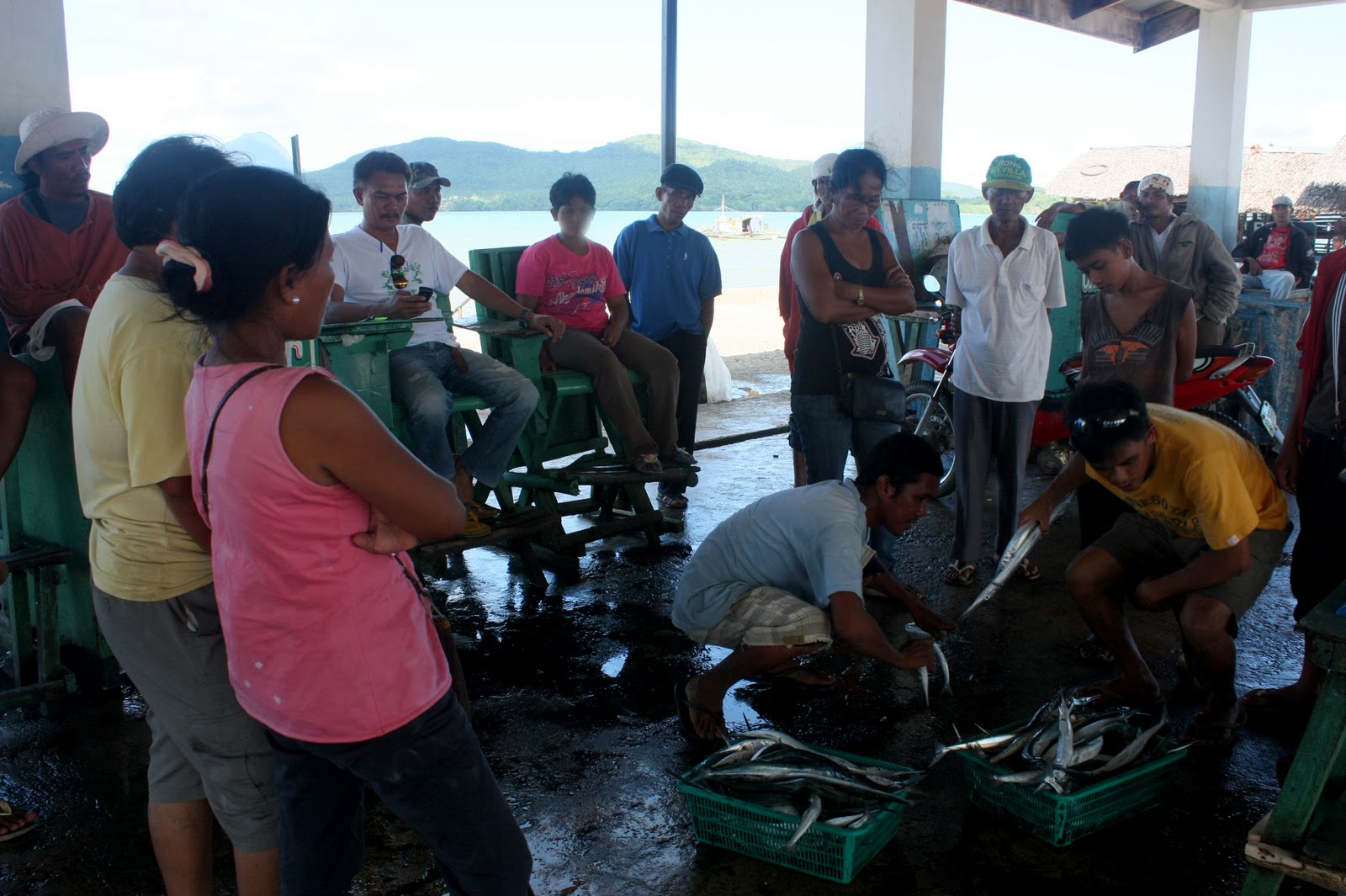
Before I finally boarded a pump boat going to the sandbar, I went again to the fish port and saw more people buying and selling fish. There were various species of fish like sardines, mackerel, small barracuda, etc. What I noticed also was that some other salt water fish were still small and might still be young and should not be fished out yet. If this continues, there’ll be fewer fish to catch in the Visayan Sea since there’ll be no mature fish to lay their eggs. Ultimately, the people of Concepcion will be the ones mostly affected if they don’t start doing something about it.
Small Barracudas
 At 4pm, I was on my way to Bolobadiangan Island aboard a pump boat owned by Kuya Bernie. I was a lone passenger in a boat good for 5-8 persons, so I had to pay more for the ride (the downside of solo travel). It cost me P500 one-way. P1, 500 is charged for two-way. It is actually cheaper than the regular price for tourists because a return boat transfer costs P1, 500. It so happened that Kuya Bernie was on his way to the island to fetch other tourists for island hopping.  His boat actually doubles as a passenger boat in regular days. If you’re a solo traveler on a budget, you can actually wait for these passenger boats (usually after people from other islands bought fish in the port, one in the morning and another in the afternoon) and ask the boatmen if they can drop you to Bolobadiangan. Regular fare is P30 for the locals, but it is advisable that you give more since you’ll be the only one going to the sandbar. If you are three or more in the group, you will not be allowed to ride the passenger boats.

Bolobadiangan Island during sunset

Taken from the other end of the island, just before sunset
 After more or less 20 minutes, I arrived at the sandbar. It was unbelievable. My jaws dropped at the sight of it. From afar it seems like a regular island with a stretch of white sand, but when you actually see it, it is mind blowing.

Bolobadiangan Island is situated near two others namely, Sanggutay and Danao Danao. It has a view of Mt. Apitong on another side where the sun sets. Sunrise is at the side of Danao Danao Island. Bolobadiangan has a sandbar that stretches for about 100-200 meters, a picture-perfect view that could rival even Boracay. It is privately-owned by Manong Sanny’s family who live in a modestly big house. Some of their relatives also live there and help them in the resort. Aside from the houses, there is also a Baptist Church in the island. Residents from nearby island barangay go there for worship.

Sandbar Island Resort
An open-air cottage for rent at Sandbar Island Resort
The island resort has three big cottages for those who wish to stay for a night or more and tables for day trippers. Two of the cottages cost P800, while the family cottage costs P1,000. But this is not your typical island-resort cottages. The cottage has neither air-conditioning unit nor fan, no bed, just a ‘papag’, but the resort provides pillows, blanket, and banig. It has no cabinets or drawers. It basically has nothing in it. The toilet is a few feet away from my cottage, and I was given a key to one of the toilets for my own use. There is only salt water in the toilet though because water is difficult to come by. If you want to take a bath after a swim, you’d have to buy water that costs P20 per container.

I think the P800 charge is a bit pricey given the lack of amenities and it also does not include the entrance fee of P25, but since there is no competition with other resorts the tourists have no choice but to take it. A cheaper way to enjoy the island is a day trip; you only have to pay the entrance fee and another P20 for the water container. The downside of it is that you cannot enjoy a night in the island, which is a different experience altogether (more about this later).

Electricity is available in the island but only between 6pm to 10pm. After that, you only have the gazillion of stars and the moon. I saw solar panels in one of the cottages and another in the main house but mostly a generator supplies the electricity. The resort also has an updated karaoke machine with, wait for it, newly-bought amplifiers. How’s that for island living?

Sun sets on the side with Mt. Apitong in the view
When I arrived, Manong Sanny greeted me. I introduced myself and he said he remembered me because I texted him inquiring about the rates in their resort. He didn’t reply to my text message because he thought I was not serious about it. He said I should have called. The moral lesson is, call him if you want to reserve a cottage.

He introduced me to his daughter, Rexanne, who has a cute five-year old son, Jan Jan. She’s the one running the place with the help of their relatives as staff. I met Cherry and Biboy, both high school students. Since there were no classes, they were there helping in the resort. They were the ones who attended to my needs and joined me in my cottage to accompany me for the night. Rexanne did not want me to sleep alone.

There were other guests in the resort when I arrived, one group that came from Manila and another group who were locals and were actually relatives of Rexanne’s family. The husband and wife are OFWs spending their vacation in their hometown with their friends and family. They were very nice to me, inviting me to eat and drink with them. I planned of asking them if I can ride with them back to Concepcion the next day so I don’t have to pay too much for the boat ride. But things did not go as planned.

Rexanne invited me for coffee in their house. It was already past 4pm and the sunset was nearing, but I had some few minutes to spare for a coffee. I met her mother, who is a midwife in the town. She was on leave though because of an accident: a clam bit her and she had 14 stitches in her ankle because of it.

Rexanne was curious why I was alone. I took it to mean that this kind of experience was meant to be shared. We also talked about the potential of their resort, which is already in its fourth year of operation. The only thing that is lacking in it, I told her, is a restaurant. She said she hired a cook before, but the cook did not want to stay in the island. It was like an on-call cook. For solo travelers like me, she said they can accommodate; the problem is the big groups. They need a stay-in cook to serve them.
Amazing Sunset
I took my leave after coffee to watch the sunset. After that, I took a night swim, took a bath, and prepared for dinner. They served me sinigang na baboy and dried fish--good for three persons--but they only charged me P100 for the meal.

I was in the middle of my dinner when an Ilonggo whom I loved dearly called me telling me he was in Concepcion. So much for solo traveling, I thought. But I was happy I have someone to share the island with (That's why there's a plural noun in the title; no, it is not a grammatical error.).

It was 7.30 pm and it was already very dark for a boat to sail. We tried contacting Kuya Bernie, but he was already in his home island where there is no phone signal. There were no more fishing boats in the port. The resort actually has a boat, but Manong Sanny would not risk fetching my friend because it was dark already. He suggested that he stay in the town for the night and go to the island in the morning. Good thing Jim, the Tourism Officer, was still at the office and he assisted this one crazy Ilonggo. 


The moral of the story is (1) to tell your friend earlier that you'll be going (which spoils the surprise); (2) to arrive in town when sun is still up to avoid being stranded.  

After dinner Rexanne and I talked some more. Then Manong Sanny called on us to ask if we want to see a bonfire. We went to the beach to see it. After that, I walked to my cottage and slumped in the hammock. On my way, I saw the two groups already downing bottles of alcohol. The Ilonggo group invited me for a drink, but I was too tired already and politely declined. At around 11pm, Cherry, Biboy and I went to sleep while the others enjoy their last night in the island.

Sunrise, Shell Garden, and More
Why I Woke Up at 5 am
Hello Sun!
Other Early Birds
I’m not usually a morning person, but if you are in an island it’s almost a sin not to wake up for the sunrise. Surprisingly, I awoke automatically (with no alarm clock) at around 5am, and the sun was just about to rise. I grabbed by camera and went outside. Cherry and Biboy were still fast asleep. Maybe they are so used to the sight of the sunrise that they prefer to get more sleep.

Outside, the resort staff were already cleaning the ground--bamboos used for the bonfire, bottles from last night’s drinking, some plastic waste brought by the tide. I started taking pictures and then later realized that I haven’t even washed my face yet.

It was low tide that time, and Nanay said it was the best time to see their shell garden. This garden provides protection to clams of various sizes from being picked up by other islanders. They put artificial corals in the shell garden in addition to newly-formed natural ones to attract fish as well. Manong Mode, a resort staff and also a relative of the owners’, went with me and told me things about clams and corals.   
The Shell Garden
Manong Mode and the Corals

Octopus!

The Expensive Exotic Sea Creature (I forgot the name)
 After our tour in the shell garden, we went to the other side of the sandbar to see smaller clams. Manong Mode said that during high tide, they get these young clams and transfer them to the shell garden. Since it was low tide, we were able to walk in a long stretch of dead corals. I saw other sea creatures, like octopus and a black, round, long creature that Manong Mode said is sold at a very high price to Chinese as exotic food.  Unfortunately, our tour abruptly ended because of the morning rain. We headed back to the shore, and I waited for my friend to arrive. 
Here comes the rain. Manong Mode and Nono, the dog
**Photos taken by me :)

[to be continued]

Sunday, November 6, 2011

Islanders for a Day: Island Living at Bolobadiangan Is., Concepcion, Iloilo

Part 2/3: Killing Time in Concepcion

I had three hours to spare before the boatmen picked me up at 4pm, so after I ate lunch with Ricky, Concepcion’s Tourism Office Staff, I walked around town with him as my guide.

Concepcion is approximately two and a half hours away from Iloilo City if you take HPQ bus. You can find it at Tagbak Terminal in Jaro District. HPQ bus is the only one that plies the Iloilo City-Concepcion route. Fare is P120. But if you want to get there thirty minutes earlier, you can ride an HPQ van found also in the terminal. Travel time is approximately two hours.

According to its official website, Concepcion is a 4th class municipality in the northern part of Iloilo province. It is composed of 16 islands, 11 of which are island barangay. Fishing is the primary source of livelihood, subsistence farming the second. Tourism may very well be the next big income generating industry for the municipality although the tourism officers I talked with admitted that they were still not ready for tourists. Although there are already available inns at the town proper (Jun Bee, for one), there are almost none in the islands for tourists, except for the Sandbar Island Resort at Bolobadiangan Island. Island transfers still need to be organized because at present if one needs a pump boat, Ricky has to text them. Problem is, sometimes the boatmen can’t receive the text messages on time because there’s no signal in their island.


On the other side of the port, fishermen help 'park' a boat ashore
Ricky and I first went to the fish port, which also serves as a dock for passenger boats carrying people plying between their homes in one of Concepcion’s 16 islands and the mainland where the town proper is. I noticed though that there were many smaller boats docked in the fish port. Ricky told me they are privately owned by fish buyers who in turn sell it in their barangay. 
Small boats owned by fish buyers from other islands docked at the port

It was my first time to be in a fish port so I was not aware on how business is done there. The process is like this: the fishermen go out to the sea, catch fish, then go back to the port. They then bring their catch to a fish broker stationed in the port. The fish broker will be the one to set the price for the fish caught. Pricing is arbitrary. When I asked Ricky where the brokers base the price, he said they just know it. The selling price includes the broker’s commission and the fisherman’s pay. Now, the fish buyers from other barangay, including those from the islands, can only buy fish through a broker--they cannot buy directly from a fisherman even though that would mean buying fish at way, way cheaper price.

Why? I asked Ricky.
He said it’s just the way it is.
What does the municipality do about it?
That’s the way it is, he said.
A fish broker
Negotiations between sellers and buyers of fish
Fishermen, brokers and buyers gather at the port for the afternoon catch


After the fish is bought, it is repacked ready to be sold to people in other barangay
So you see, the system allows the fishermen to be exploited. Not only that. People who will buy from the buyers will now have to pay more for the fish. “That’s the way it is.”

I don’t know if Concepcion’s case is the same as with other fish ports, but after I learned about these, I could not help but feel sorry for the fisher folks--they get the least amount of money but they get to do all the work. Their take-home pay is only enough to buy food for their family for a day. Ricky told me that sometimes, the fishermen in the islands exchange their catch for rice or meat or vegetables with the other villagers. The brokers, however, get the biggest chunk of money from it with only their saliva as capital. Ricky told me that these fish brokers have become well-off because of their trade.

We then went to the town’s polytechnic college a few meters away from the fish port. It is called the Northern Iloilo Polytechnic State College, where Ricky finished college. It’s a relatively small campus but probably enough for a small town like Concepcion. Like most state colleges, government neglect is apparent in its dilapidated classrooms. There are two main buildings, a breeding facility, an open field, and a viewing deck overlooking the Visayan Sea dotted with islands. It was simply magnificent! The view was just breathtaking.
The School in Town

As seen from the viewing deck 
From the viewing deck, we can see Pan De Azucar, where Mt. Manaphag is located. According to Ricky, its summit can be reached within three hours--that is if the one who will climb its steep slopes is an experienced mountain climber (I bet it will take me double that time to reach the top). Rolling hills in the middle of the sea, an illusion formed by the other islands (oh memory, why do you make me forget their names?), can also be seen.

We spent a lot of time in the viewing deck discussing the future of Concepcion as a tourism hotspot, the illegal commercial fishing that affects their fishermen, and environmental issues it faces. Ricky also lamented on the lack of experts on Fisheries in their town. He said that most students in their town take up computer-related courses because of the demand in the market; however, what is needed in their hometown are courses in environmental science or fisheries.

It used to be that the polytechnic college offers a course in Fisheries, but now it specialized in Education. If a student wants to study Fisheries, he or she has to enroll either in UP Visayas (in Miag-ao), which specialized in it, or in another university (blame my unreliable memory) in the city.

Problem is, there are only few students who take the UPCAT and could afford studying far from home. I told him about the AAP (Affirmative Action Program) of UPLB Pahinungod wherein volunteers are sent to underserved communities to conduct lectures in subjects covered in college entrance exams. Maybe we can conduct one in Concepcion, I told him. He seemed interested although I saw a hint of hesitation after I told him that the LGU or another funding agency should sponsor the expenses of the volunteers.
Ricky Galvan, Municipal Tourism and Environment Officer.
He's also into hand painting souvenir t-shirts like the one he's wearing.
I understood his hesitation given the little budget Concepcion has. Ricky mentioned that in safeguarding their waters from illegal commercial fishing boats alone, the budget is limited. So I told him again about the rich potential of tourism for their town’s income.

When I started my trip, my problem was where to go. It was selfish, as a friend told me, given the problems of the world. It turned out that my selfish wants would lead me to understanding the problems of the world.

Islanders for a Day: Island Living at Bolobadiangan Is., Concepcion, Iloilo

Part 1/3: E la voce di Dio (or The misadventures caused by the voice of my god)

The end of October is usually meant for a reenergizing lakwatcha since the semester has only ended and the next is just few days away. Originally, I was scheduled to go to Lake Sebu via GenSan (General Santos City, South Cotabato), but it did not push through. The long and short of it is that I missed my flight because I overslept—to think that my flight is at 12.35 pm! (I’ll have to write a separate blog entry on this adventure).   Oh well, as my friend said, è la voce di Dio (it’s the voice of God).
Lake Sebu, where I was supposed to go
Photo from lakesebuphilippines.blogspot.com
 Maybe my god has other plans for me. It was not easy to learn of this plan though. I stayed at the airport for about three hours thinking of where to go. I could have bought a new ticket to GenSan or Davao had the ticket not cost me an arm and a leg. I have a few places in mind but could not decide where to finally spend four days. I was already in lakwatcha mode, so to speak, and all I was certain about is that I needed to have a vacation after all the stress of checking jillions of papers. I badly needed it to clear my mind, unload it of unhealthy thoughts and ready it for the coming mental stress of the next semester.

I thought of going back to Bagasbas in Daet, Camarines Norte to surf and finally go to Calaguas Island. I texted my college friends if they want to join me, but when they knew that we have to leave on that very same day, they said they’ll take a rain check. I don’t blame them. Only a crazy person like me will take that trip. Then I thought about going to Sagada but gave up on it since my friends and I have an annual pilgrimage to it in December. Then I thought of the 16 islands of Concepcion, Iloilo and imagined myself letting time pass listening to waves and marveling at the vastness of the sea and the night sky. I suddenly realized how I desperately longed for the calmness of the sea.

Now, Iloilo is unlike any other city for me. It holds a special corner in my heart, and when I think of going there, there is always a struggle between going and not going. A special consideration should be made; otherwise, the lakwatcha trip is a disaster waiting to happen.

My friends' prodding to go to Iloilo instead of Bagasbas (I already called the bus liner to inquire about their trips to Daet) gave me confidence to finally purchase that golden ticket. But my god would not make it easy for me. The ticket to Iloilo cost more than that of GenSan or Davao. I went to another airline and its staff said all flights for the day were fully booked, and I could not just afford the cost of the next earliest flight.

What I finally did was to book the earliest flight to Bacolod and go to Iloilo via a two-hour ferry ride. Fortunately, I could afford the ticket even though it’s still a bit pricey. Talk about will power.

Iloilo, Finally

I’ll skip my Bacolod adventure for now and write a separate entry on that. I was in Iloilo City in the morning of Oct. 28, but I scheduled my trip to Concepcion the next day so I can take a rest and jog at Iloilo Boulevard in the afternoon (I’m training for a full marathon in March so I can’t miss a run).

Balay Ilonggo inside UP Visayas in Iloilo City

Across Balay is UPV's Main Library, which is formerly the City Hall

The next day, I went to Tagbak Bus Station in Jaro at around 9 am. From Balay Ilonggo at UP Visayas, where I stayed for the night, I rode a jeepney going to Leganes. Fare is P12.00. At the terminal I rode the HPQ bus, which is the only one going to Concepcion. It is not an air-conditioned bus but I did not mind because I expected that the air is fresh and clean, so fresh and clean that I could not help myself falling asleep during the trip (my friends have a nickname for me: troso).

I awoke at Ajuy, the town before Concepcion. It is mainly a farming community with nipa huts dotting the vast fields every now and then. There’s a row of big concrete houses though and they stick out like a sore thumb. As expected, one of these belongs to a local official as announced by a tarpaulin outside its gates.

I arrived at Concepcion town proper past 12 noon and went straight to its Tourism Office since I only know a few things about the town. No need to ride a traysikad or a motorcycle because it’s just a few meters away from the bus stop. Good thing that even though it was a Saturday there were people in the office. There I met Jim Pendon, Concepcion’s Tourism Officer. He was in his house clothes (it’s a Saturday, anyway) with two other people cutting colorful paper flowers. They were preparing for a sports fest in the town the following week.

I told Jim of my original plan, which was to stay at the town proper for the night and head to the sandbar at Bolobadiangan Island in the morning. Jim suggested I stay at Jun Bee, a restaurant and lodge a few meters away. He said it has a swimming pool but that I could not swim in its beach. I then asked for other beach resort and he mentioned Iyang, some 300 meters away. It has cottages with basic amenities at P300 a night. I’ll take it, I said, if only for the beach.

Then we scheduled a pick-up the next day. I told him I want to catch sunrise in the island. He said okay and went on to text someone for the boat rental. Jim went outside probably to talk to a boatman when another tourism officer arrived. His name is Ricky Galvan, who is in charge of transportation. He is the one who coordinates boat rentals for island transfers and tours.

When he heard of my plan, he said that it would be difficult for the boatmen since catching the sunrise means that I have to be at the Sandbar at around 5 am, which in turn means that the boat should pick me up at 4.30 the latest. This means that the boatmen, who will come from a different island, should get up at around 3 am. There’s nothing wrong with getting up that early, he said. What worries him is that it is still dark and it will be dangerous for the boatmen to sail at that hour. He suggested instead for me to spend the night at the Sandbar already. Sounds like a good plan as well. In that way, I can catch the sunset that afternoon and the sunrise the following morning in the island. Sounds like a good plan, indeed.
Part of Town Plaza
 I told Ricky I wanted to see the town first before I head to the island, so he scheduled for the boat to pick me up at around 4pm and at 9am the following day going back to Concepcion. Everything was set then. Or so I thought.


*Photos taken by me, unless stated otherwise.